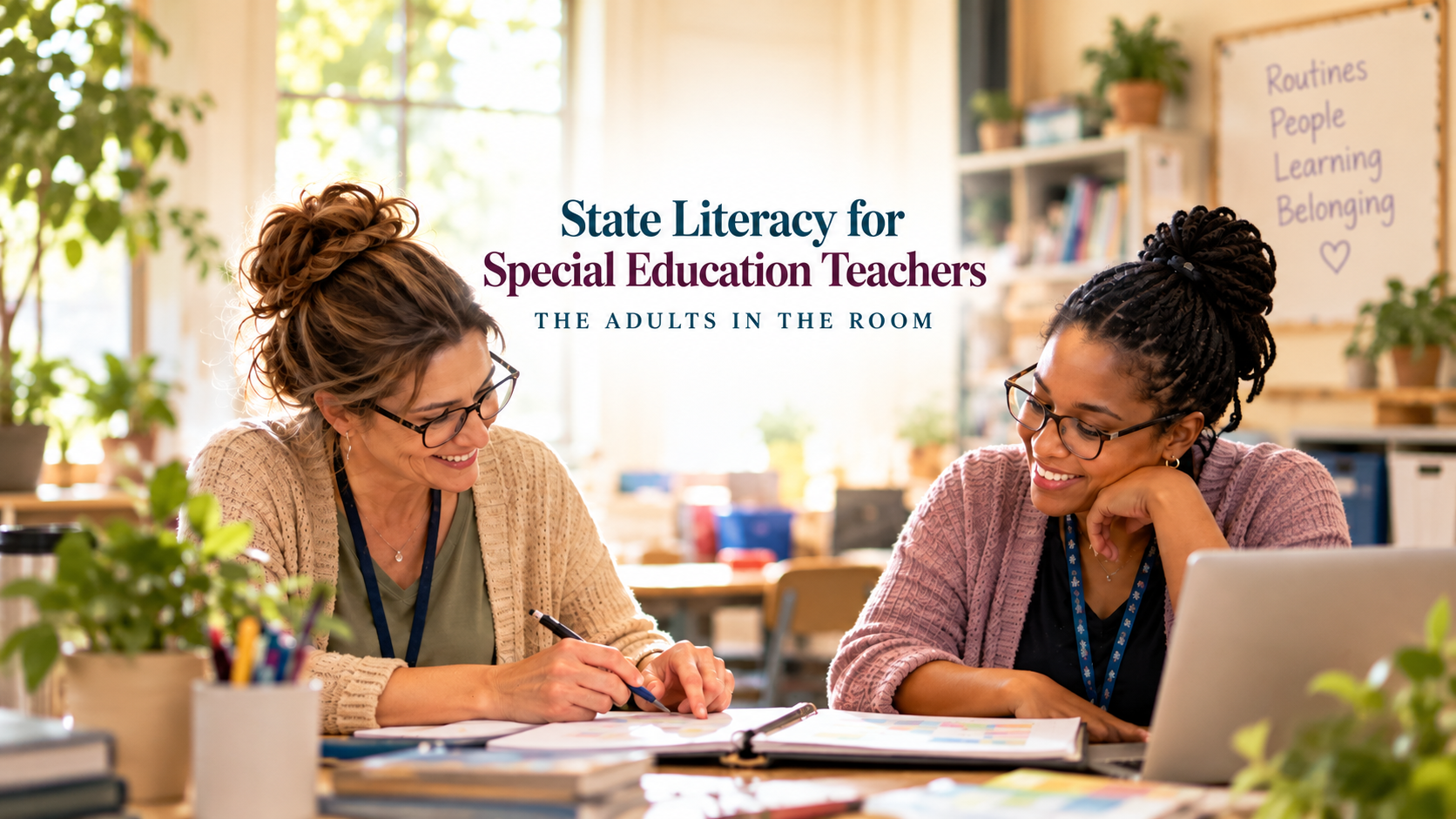
State Literacy for Special Education Teachers
The Adults in the Room
Protecting Dignity, Restoring Access, and Designing Classroom Partnerships That Work
A 3½-hour professional development institute with Katie Wiseman, M.Ed.
Every special education classroom contains more than one learner.
It also contains more than one adult—each bringing a lifetime of experiences, professional knowledge, expectations, and ways of responding to the world.
Those adults are not simply delivering instruction. They are part of the learning environment.
Their relationships influence what becomes possible for the children they serve.
The teacher's access to teaching is part of the architecture of the student's access to learning.
The Other Adult in the Room
Special education teachers carry extraordinary responsibilities. They design individualized instruction, coordinate services, support complex learning and medical needs, and make countless decisions throughout the school day.
They rarely do this work alone.
Paraprofessionals are essential partners in delivering instruction, supporting students, recognizing emerging needs, and maintaining the classroom's daily systems.
Yet the relationships between these adults are not always given the attention they deserve.
We establish responsibilities. We assign tasks. We organize schedules.
But how often do we intentionally design the relationships that make all of those systems work?
Professional partnership recognizes a mind—not simply a position on an organizational chart.
State Literacy invites teachers to examine the human systems operating alongside their instructional systems.
Why Professional Dignity Matters
Professional belonging means experiencing that your presence, judgment, and contributions matter to the work being done.
A paraprofessional is not another student in the classroom.
A teacher's instructional leadership does not diminish the professional dignity, knowledge, or agency of the adults working alongside them.
When we reduce paraprofessionals to the tasks they perform, we may lose access to the human capabilities they bring.
And when teachers themselves experience conflict, dismissal, or persistent tension, their own access to teaching can narrow.
Dignity is part of the architecture of access.
This institute explores why dignity, belonging, predictability, and professional agency matter—and how classroom partnerships can be designed to protect them.
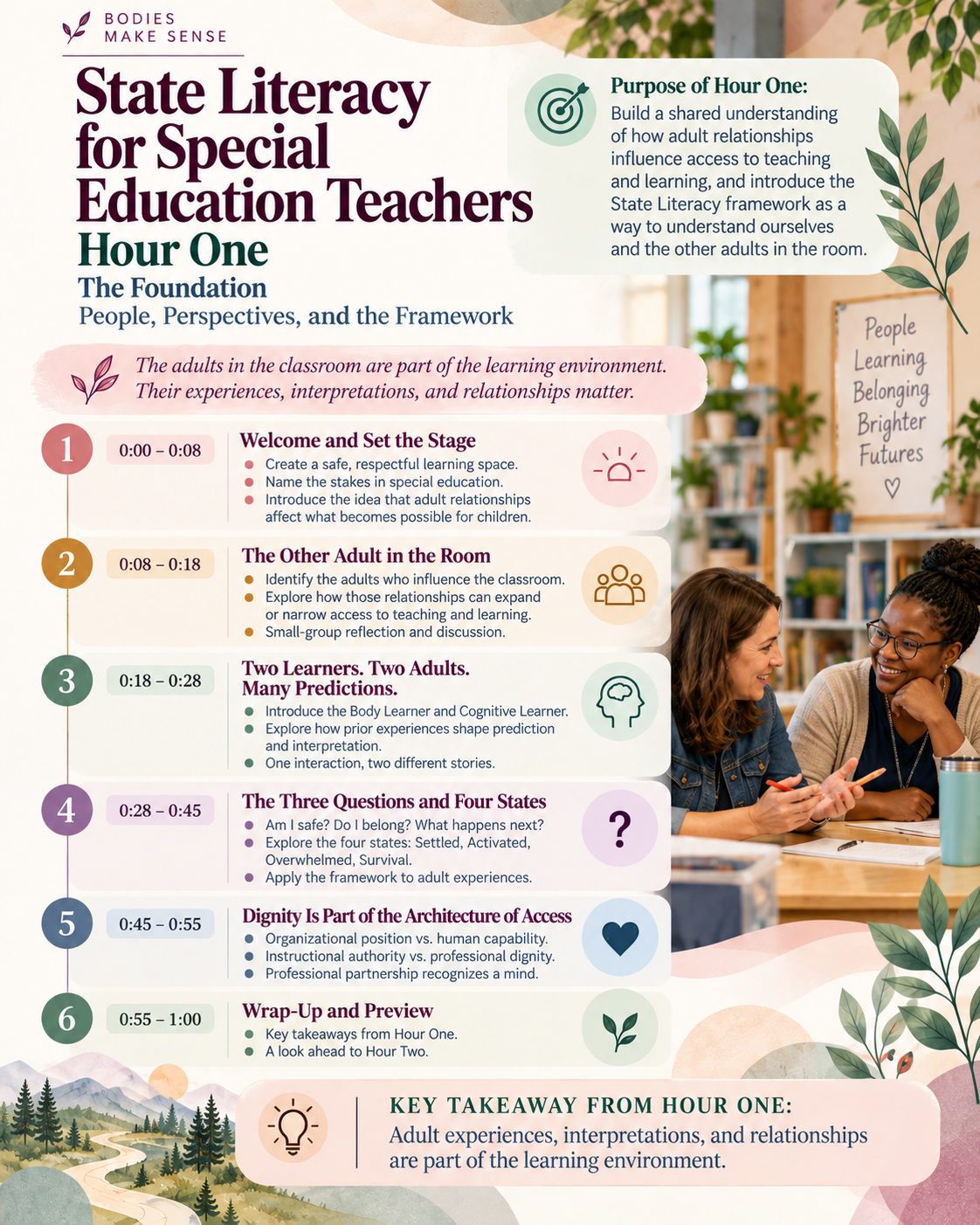
Hour One: The Foundation
People, Perspectives, and the Framework
Hour One introduces State Literacy through the adults who share responsibility for the classroom.
Participants explore the Two Learners—the Body Learner and Cognitive Learner—and the Three Questions that help us understand how people interpret experiences:
Am I safe?
Do I belong?
What happens next?
Teachers examine how prior experiences, workplace relationships, and professional expectations may shape the way adults respond to the same classroom event.
We also explore a critical distinction:
An organizational chart describes authority. It does not measure human capacity.
Participants begin recognizing the expertise and lived experience each adult contributes to the learning environment.
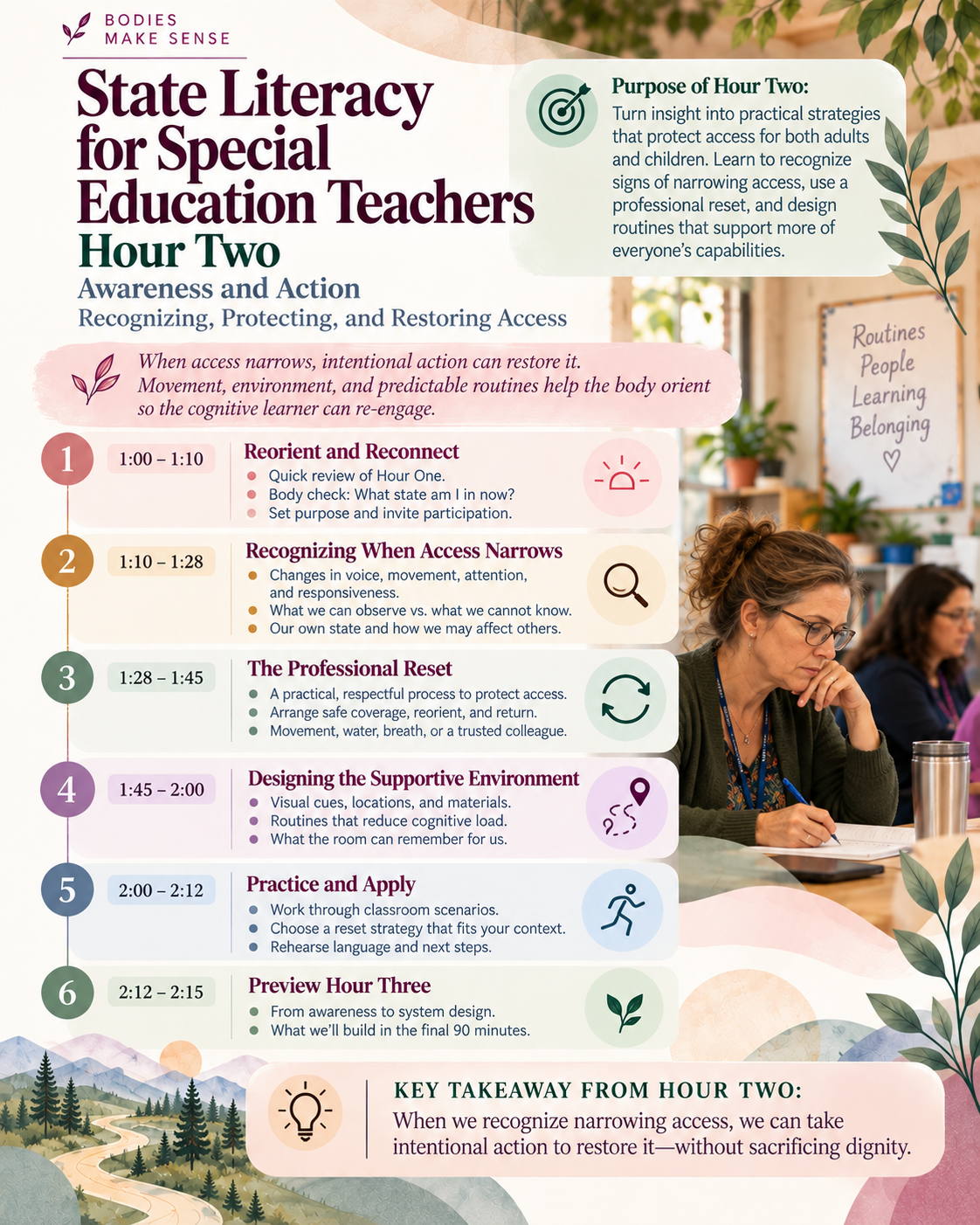
Hour Two: Awareness and Action
Recognizing, Protecting, and Restoring Access
Understanding why an adult becomes activated is important.
Knowing what to do when access begins narrowing is equally important.
Hour Two explores how pressure and adult conflict may influence voice, movement, attention, responsiveness, and the ability to remain available to others.
Participants learn the Professional Reset, a practical process for recognizing narrowing access, arranging safe student coverage, reorienting, and returning to the classroom.
The reset is not an escape from professional responsibility.
It is an intentional act of professional responsibility.
Teachers also explore how predictable communication, supportive routines, and shared agreements can help both adults participate more effectively.
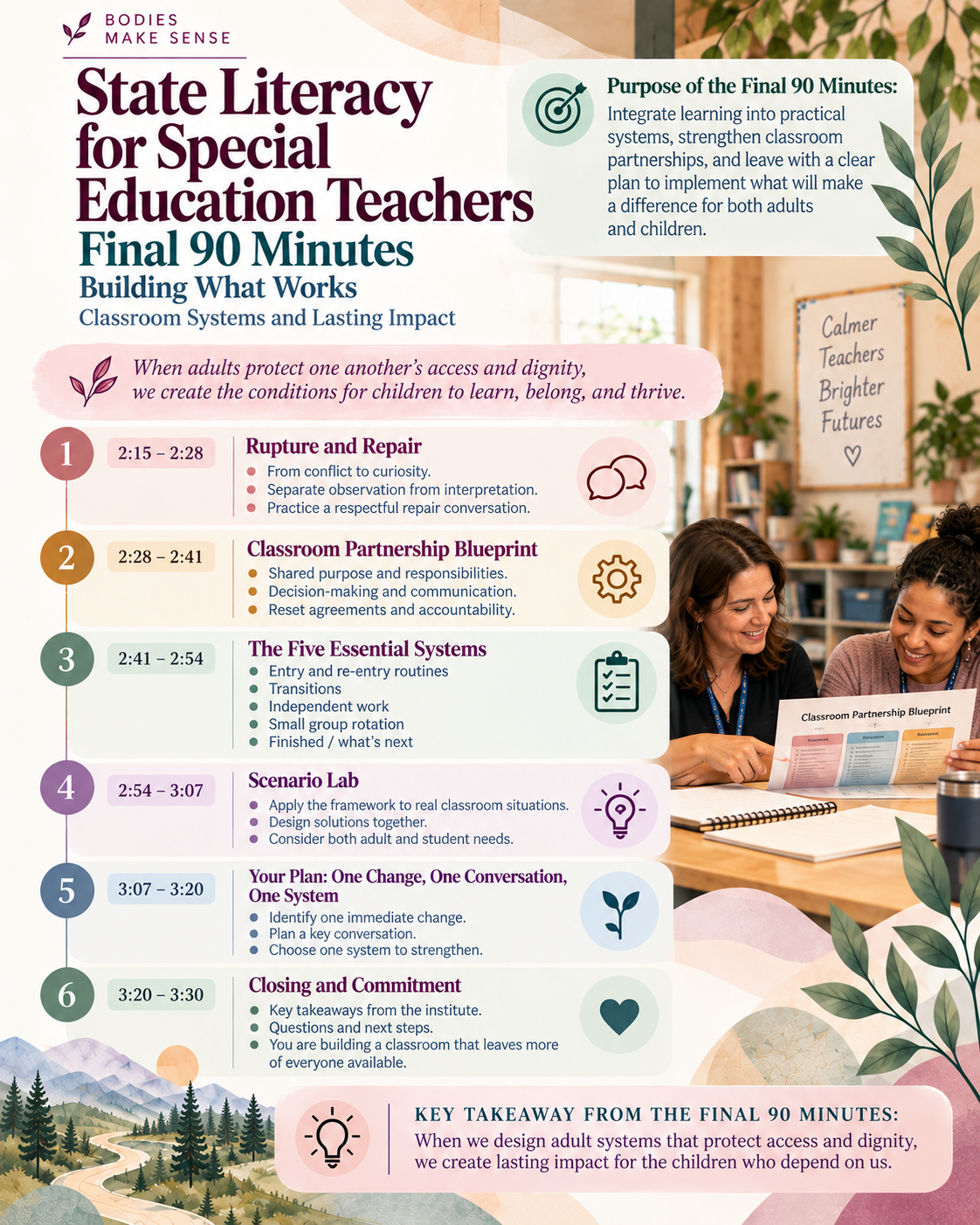
Final 90 Minutes: Building What Works
Classroom Systems and Lasting Impact
Understanding the human experience is only the beginning.
The final 90 minutes turn State Literacy into practical classroom systems.
Participants explore professional rupture and repair, respectful communication, shared decision-making, and the difference between task delegation and genuine partnership.
They develop a Classroom Partnership Blueprint that addresses:
Shared purpose and professional responsibilities
Recognition of paraprofessional expertise
Communication and feedback
Professional Reset agreements and safe student coverage
Repair after difficult interactions
Accountability and administrative support when needed
Teachers leave with a concrete plan: one change to make, one conversation to initiate, and one system to strengthen.
What Participants Take With Them
This is not simply a workshop about getting adults to work together.
It is professional learning that helps teachers understand why relationships influence access—and how to create conditions that support the people responsible for teaching and learning.
Participants leave with:
A deeper understanding of the Two Learners. Recognize how experiences can shape adult expectations, responses, and participation.
A new perspective on professional dignity. Understand why paraprofessional expertise, belonging, and agency deserve intentional recognition.
A practical Professional Reset. Learn how to recognize narrowing access and respond while maintaining student safety and professional responsibility.
Tools for rupture and repair. Practice communication that protects dignity while maintaining clear expectations and accountability.
A Classroom Partnership Blueprint. Leave with a practical structure for building more predictable, respectful, and effective adult partnerships.
The Bigger Picture
A functioning classroom is not necessarily a settled classroom.
Adults can continue performing their responsibilities while carrying unresolved tension, frustration, or distress.
And what happens today may influence what they anticipate tomorrow.
State Literacy helps us recognize that the experiences of the adults in the classroom matter—not only to those adults, but to the children who depend on them.
Protect dignity today. Preserve access for tomorrow.
We are giving teachers and paraprofessionals a framework for understanding the human beings they already are—and designing classrooms where more of their capabilities remain available to the children who need them.
Access changes before behavior changes.
Bring State Literacy to Your Special Education Team
State Literacy for Special Education Teachers: The Adults in the Room is a 3½-hour interactive professional development institute designed for special education teachers and adaptable for teacher–paraprofessional teams.
Bring a new understanding of professional dignity, adult relationships, and access to teaching and learning to your campus or district.
Request information about bringing this institute to your team.